
In a move that sent shockwaves through the tech industry, NVIDIA has officially launched the nvidia rtx spark, a so-called “superchip” designed to reinvent the personal computer for an era of autonomous AI agents. This audacious announcement, made by CEO Jensen Huang, positions the the technology not merely as a new processor, but as the engine for a fundamental change in how we interact with our devices—moving from clicking and typing to simply asking an AI to perform tasks. Major manufacturers like Dell, HP, and Lenovo are already lining up to release laptops this fall, signaling massive industry buy-in.
Table of Contents
But a closer look at the details suggests a more complex picture, one where breathtaking promises of power collide with troubling questions about real-world performance, power consumption, and the alarming security implications of unleashing AI agents on personal devices. This report dissects the marketing from the reality of the this innovation.
NVIDIA’s Assault on the PC Market
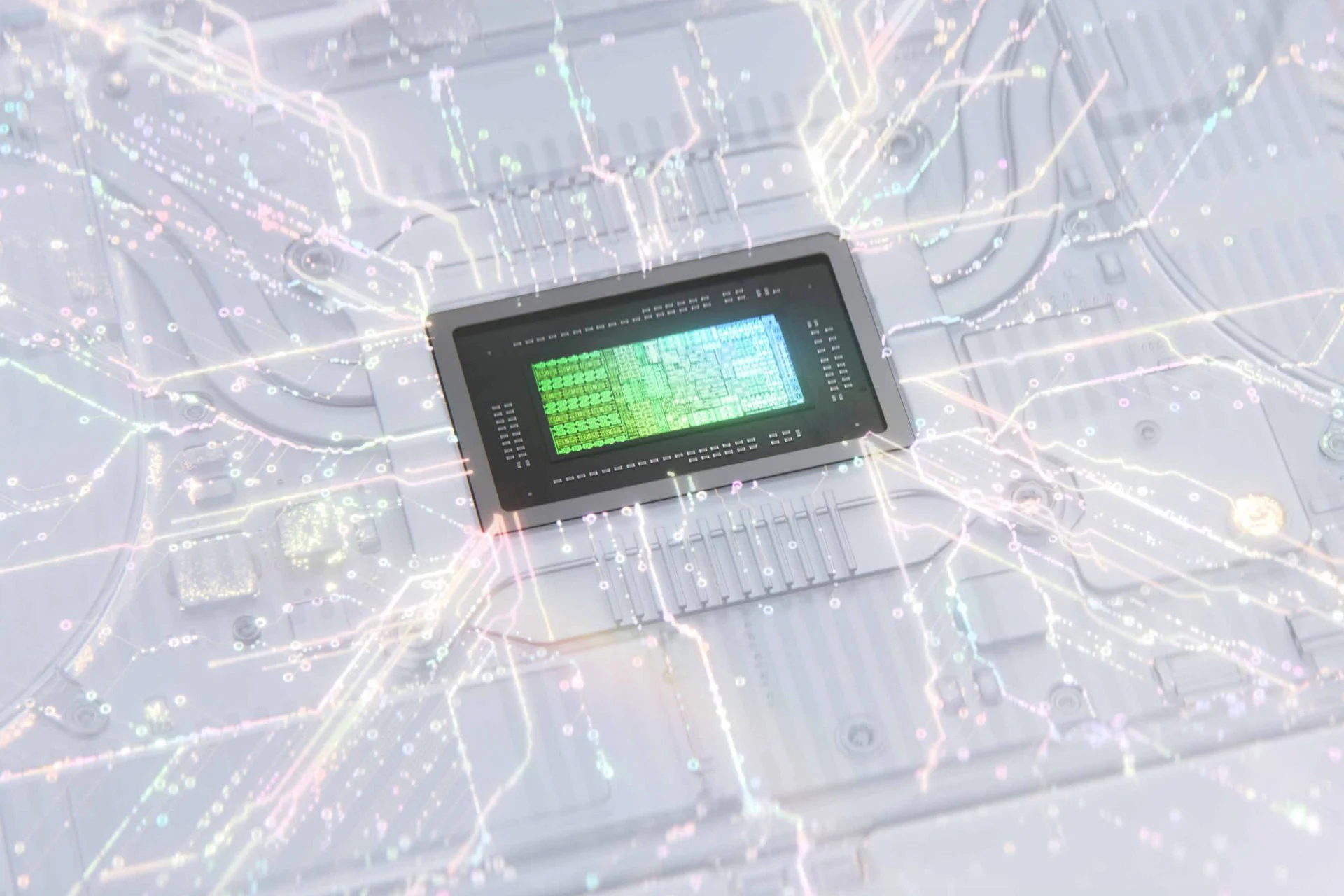
At its core, the the system is an impressive piece of hardware, representing NVIDIA’s first fully integrated consumer chip for the Windows on Arm platform. It’s a system-on-a-chip (SoC) that merges a high-performance, 20-core Grace CPU, co-designed with MediaTek, with a potent Blackwell RTX GPU featuring 6,144 CUDA cores. This is all connected via up to 128GB of unified memory, an architecture that echoes Apple’s successful M-series silicon, allowing the CPU and GPU to share a single, fast memory pool.
This powerful package is NVIDIA’s clear shot across the bow at Apple, Qualcomm’s Snapdragon X series, Intel, and AMD. The company is leveraging its entire ecosystem—including CUDA, RTX, and DLSS 4.5—to create a platform it hopes will be irresistible to both developers and consumers. Initial signs are positive, with a broad coalition of PC makers including ASUS, HP, Lenovo, and even Microsoft Surface planning to launch it devices this fall. This widespread adoption lends a critical market foothold right out of the gate.
Read also: Securing ai: A Critical Warning for Unprepared Enterprises
A Critical Look at Performance Claims
Even with its formidable design, several red flags emerge when contrasting NVIDIA’s marketing claims with early analysis. The company touts a headline figure of 1 petaflop of AI performance, a number that is almost meaningless for consumer workloads. More concerning are the initial benchmark leaks. One report highlights that in Geekbench 6 tests, the the platform apparently fails to compete with Apple’s three-year-old M3 Max chip on single and multi-core performance.
Moreover, practical engineering challenges present a significant hurdle. Experts are asking how a chip capable of such immense performance can operate within the slim and light form factor of a laptop without either melting or offering abysmal battery life. While NVIDIA promises “all-day battery life,” CNET and other outlets are skeptical, especially given the heavy workloads being advertised. This skepticism is bolstered by leaks suggesting one high-end the technology laptop will require a massive 245W power supply, a figure that seems to contradict the promise of ultra-efficient computing.
The Agentic AI Contradiction
The most alarming aspect with the this innovation is not the hardware itself, but the very paradigm it enables: on-device, autonomous AI agents. The vision of an AI that can “autonomously navigate the user interface” is a Pandora’s Box of security and privacy risks. Security researchers have long warned about the dangers of agentic AI, which include novel threats like prompt injection, goal hijacking, and memory poisoning. An attacker could, for example, embed malicious instructions in an email that an AI agent processes, causing it to leak sensitive data without the user’s knowledge.
As a safeguard, NVIDIA and Microsoft are promoting a new security feature called NVIDIA OpenShell, which is designed to run AI agents in a more secure, sandboxed environment. While this is a necessary step, it may not be sufficient. The fundamental challenge is that these autonomous systems are designed to access your data and make independent decisions, creating an attack surface far more complex and unpredictable than traditional software. The introduction of the system-powered PCs may represent the largest-scale deployment of this risky technology to date, and it’s unclear if the safeguards are truly ready.
Related article: Aeon robot: The Critical Warning Behind the AI Hype
The Bottom Line on nvidia rtx spark
It’s clear that the it is a monumental feat of engineering that has the potential to reshape the PC industry. Its tight integration of a powerful CPU, GPU, and unified memory, backed by nearly every major PC manufacturer, makes it a serious contender in the new silicon wars. However, the “reinvention of the PC” that NVIDIA promises is built on a foundation of questionable performance claims and critically unresolved security challenges. The rush to deploy autonomous AI agents directly onto consumer devices may be putting marketing ambitions ahead of user safety.
As these devices prepare to hit the market this fall, a healthy dose of skepticism is warranted. The initial excitement surrounding the the platform must be tempered by a rigorous, independent evaluation of its real-world capabilities and, more importantly, its security integrity.
Critical Signals to Watch:
- Watch for: Independent, third-party benchmarks comparing the technology to offerings from Apple, Intel, and AMD, especially on non-AI tasks.
- Observe: Real-world battery life tests under mixed usage, not just NVIDIA’s best-case scenarios.
- Investigate: Reports from early adopters regarding software compatibility, emulation performance, and potential DRM issues on the Windows on Arm platform.
- Critical Threat Vector: Security research papers and white-hat hacker reports that test the robustness of the NVIDIA OpenShell sandbox and attempt to exploit the new agentic AI functionalities.
- Evaluate: The final retail pricing, as a premium cost could limit the nvidia rtx spark to a niche market, blunting its disruptive potential.