In a stunning new development, a major industry survey has cast a harsh light on the state of securing ai. The “State of AI in Cybersecurity 2026” report, released by Darktrace, reveals a critical disconnect: while AI adoption is nearly universal, the security measures meant to protect these systems are lagging alarmingly behind. The data is unambiguous: 92% of security leaders admit that the rise of AI-powered threats is forcing them to upgrade their defenses, yet a mere one-third feel fully prepared to investigate an AI-related security incident.
Table of Contents
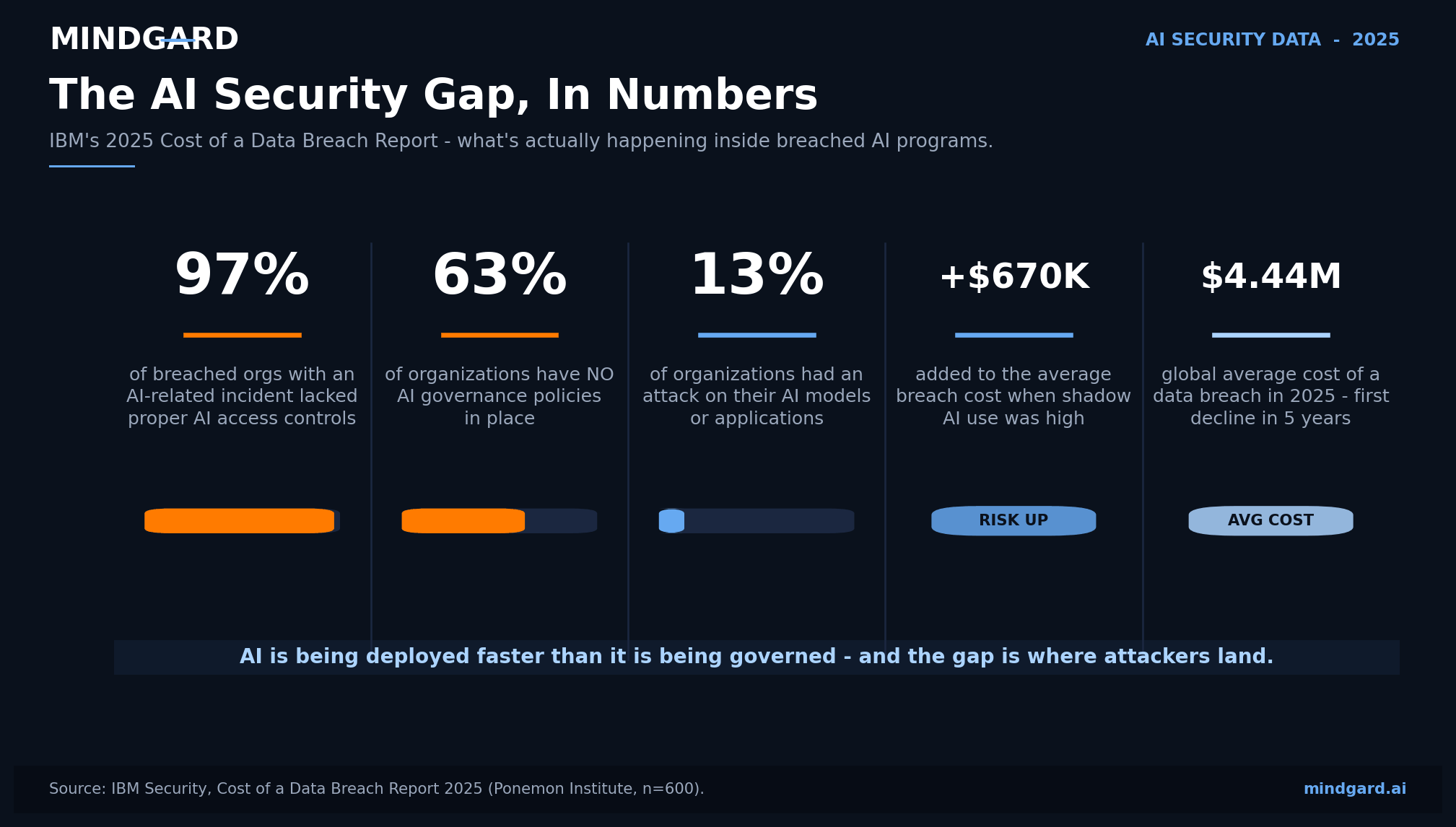
The implications are immediate and severe. The gap between rapid AI deployment and mature security controls creates a massive, enterprise-level vulnerability. As we stand in mid-2026, the landscape is already being defined by AI-generated phishing campaigns that are radically more effective than their human-written predecessors. The era of simply adopting AI is over; the era of securing it has begun, and most organizations are already behind.
Mapping the 2026 AI Threat Landscape
To fully grasp the situation, one must look beyond broad survey data to the specific threats emerging in the wild. The primary evolution in 2026 is the weaponization of generative AI. Adversaries have adopted sophisticated large language models (LLMs) to automate and scale attacks with remarkable efficiency. This has completely changed the economics of cybercrime, lowering the barrier for less-skilled attackers to launch highly effective campaigns.
A clear case in point is AI-generated phishing and business email compromise (BEC). These are not the typo-ridden scam emails of the past. Modern AI can craft hyper-personalized messages, mimicking the tone and context of internal communications with near-perfect accuracy. One report noted a staggering 1,265% surge in phishing attacks linked to generative AI. Beyond email, attackers are using AI for deepfake voice and video, leading to multi-million dollar fraud cases where employees are tricked by synthetic impersonations of their executives. The core of securing ai has shifted from defending against static threats to battling adaptive, intelligent adversaries.
You might also like: Valleytronics chip: A Critical Breakthrough for 2026?
Moreover, the very machine learning models that companies deploy are becoming targets. Adversarial AI attacks, such as data poisoning and model evasion, seek to corrupt or deceive these systems from within. An attacker could, for instance, “poison” the training data of a financial fraud detection model, teaching it to ignore a specific type of illicit transaction. This represents a systemic threat to the integrity of all enterprise AI, making the practice of securing ai more complex than ever.
Behind the Survey Numbers
While the Darktrace report sounds the alarm, our investigation suggests the “preparedness gap” is even more profound than a simple lack of tools. The issue is a fundamental mismatch between legacy security architectures and the dynamic nature of AI-driven threats. Many organizations are attempting to bolt on AI security features to outdated systems, a strategy destined to fail. The problem isn’t just about having securing ai tools; it’s about having the right strategy and architecture.
Gartner offers a nuanced take. They predict that by 2028, 50% of all incident response efforts will be focused on custom-built AI applications, which are often deployed without adequate security testing. This highlights a core problem: business units are racing to deploy AI features, often creating “shadow AI” that exists outside the purview of security teams. These unmanaged systems represent a growing blind spot. While Darktrace points to a lack of readiness, Gartner’s analysis suggests the problem is compounded by a lack of visibility and governance.
The result is a perilous situation. Executives see AI as a competitive advantage and push for rapid deployment. Security teams, already struggling with burnout and a persistent skills gap, are left to secure a constantly expanding and poorly understood attack surface. This isn’t just a technological gap; it’s an organizational and strategic one. Effective securing ai requires a new pact between technology leaders, security professionals, and business units—one that prioritizes security from the very beginning of the AI development lifecycle.
The Regulatory Tightrope of securing ai
Adding another layer of complexity is a rapidly evolving but fragmented regulatory landscape. As of May 2026, governments are scrambling to catch up with AI’s impact on everything from data privacy to national security. The EU’s AI Act, which becomes fully enforceable this year, establishes a risk-based framework with strict obligations for “high-risk” AI systems. In the United States, a patchwork of state laws and federal executive orders creates a confusing compliance environment, with no single, overarching federal AI law.
Leading organizations are stepping in, but their adoption is still voluntary. The National Institute of Standards and Technology (NIST) has been actively updating its AI Risk Management Framework (AI RMF), with a new profile for critical infrastructure released just last month in April 2026. This framework is becoming the de facto standard for responsible AI governance, focusing on functions like “Govern, Map, Measure, and Manage.” However, our research shows that while many leaders plan to adopt these principles, implementation is slow and often under-resourced.
This friction between innovation and regulation puts enterprises in a difficult position. The pressure to deploy AI for a competitive edge is immense, but the legal and financial risks of non-compliance are growing. A single misstep with a high-risk AI system could lead to massive fines under the EU AI Act or trigger enforcement actions from a coalition of U.S. state attorneys general. A successful securing ai strategy must therefore be as much about legal and regulatory awareness as it is about technical controls.
Related article: Risc-v Warning: Is Production Readiness a Dangerous Myth?
The Bottom Line on securing ai
The evidence we’ve gathered is clear: The “preparedness gap” highlighted in the 2026 survey is not just a statistic; it is the single greatest strategic risk facing enterprises today. The rapid, often ungoverned, adoption of AI has run far ahead of the security and governance frameworks needed to manage it. This has created a fertile ground for a new generation of AI-powered attacks that are faster, more sophisticated, and more effective than anything seen before. While solutions providers race to market, the underlying problem is a strategic failure, not a tooling one.
Critical Signals to Watch:
- Monitor: The first major, publicly acknowledged adversarial AI attack that successfully manipulates a critical infrastructure system’s AI model.
- Watch for: Increased regulatory enforcement, particularly the first multi-million dollar fines levied under the EU AI Act for inadequate AI risk management.
- Monitor: A shift in cyber insurance policies, with carriers explicitly denying coverage for breaches caused by “shadow AI” or a lack of documented AI governance aligned with frameworks like the NIST AI RMF.
- Key signal: The emergence of autonomous attack swarms that chain together exploits at machine speed, rendering human-led Security Operations Centers (SOCs) obsolete.
- Monitor: Statements from national security bodies like the Center for Strategic and International Studies (CSIS) or CERT-In about AI-enabled threats moving from espionage to disruptive attacks on civilian targets.
Ultimately, securing ai in 2026 is at a critical inflection point. The issue is no longer about whether to use AI to defend the enterprise; it’s about how to defend the AI itself. Organizations that fail to bridge the gap between AI implementation and security maturity are not just unprepared—they are actively exposing themselves to the most significant and dynamic threats of the modern era. The time for reactive measures is over.